What Are Hama Beads?
If you have seen "Hama beads" and "Perler beads" used interchangeably and wondered which is which, here is the whole picture: what Hama beads are, the three sizes they come in, how they compare to Perler, and how to turn them into a finished piece.
What are Hama beads?
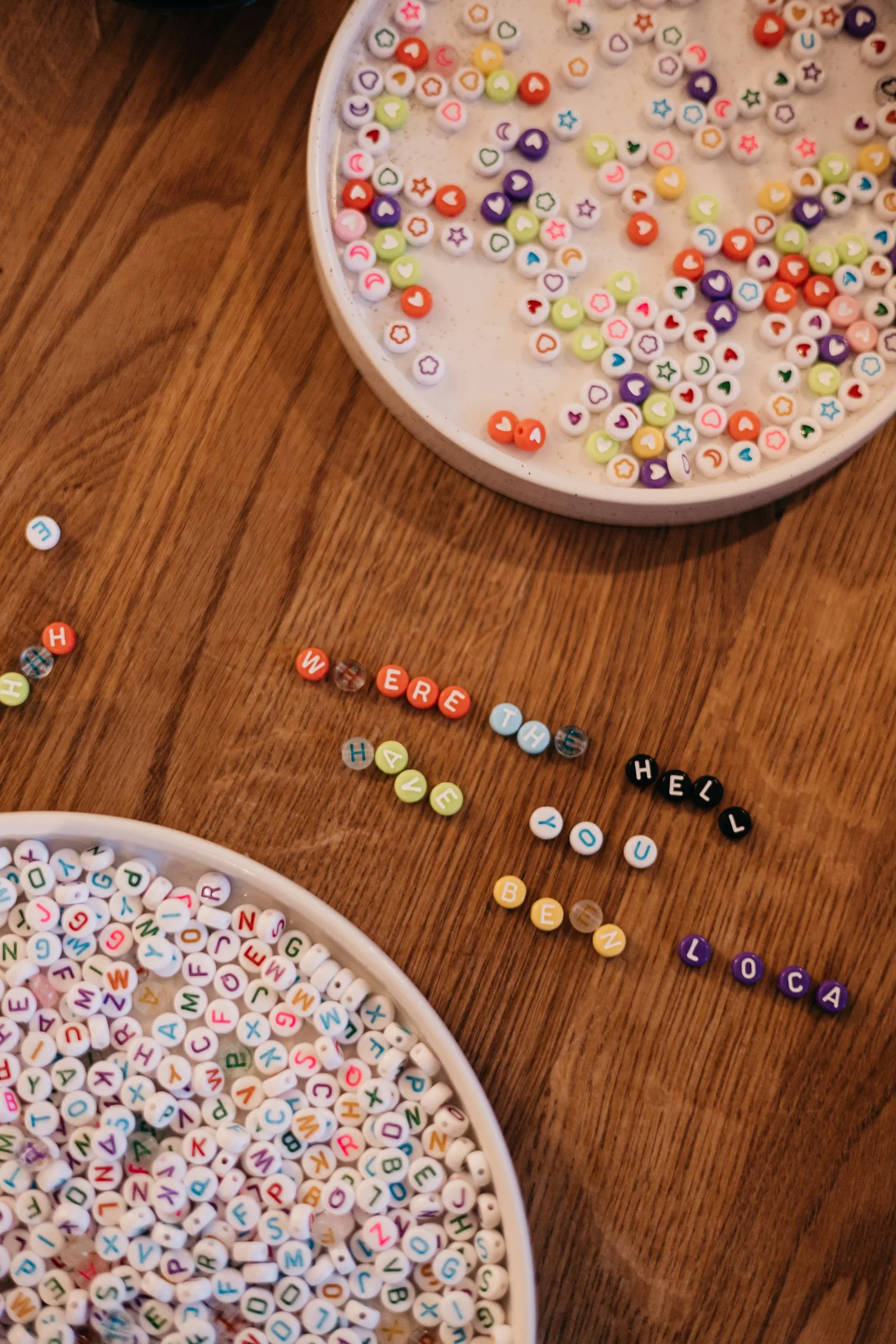
Hama beads are small, heat-fusible plastic beads you arrange on a pegboard and then fuse together with an iron, forming a solid decorative panel. They are the same category of craft as Perler beads — the generic terms are fuse beads, melty beads, or iron beads — and Hama is simply the brand name. Made by a Danish manufacturer, Hama is the dominant fuse-bead brand across Europe and the UK, the way Perler leads in the United States.
That regional split is why the same craft has two names. A UK or European crafter almost always says "Hama beads"; an American says "Perler." Under the hood they are doing the identical thing: placing beads on pegs, covering with paper, and ironing until the rims melt into one piece. Because Hama Midi and Perler are both 5 mm, the two brands are largely interchangeable, which we cover in Perler vs Hama vs Artkal.
The name confusion runs deep enough that people search "what are Hama beads" and "what are Perler beads" as if they were different products. They are not — they are competing brands of the same thing, like two labels of the same kind of pasta. If a tutorial, a pattern, or a friend says one, you can almost always substitute the other, as long as you match the sizes. That single fact — same craft, different brand, matched sizes — is most of what anyone new to fuse beads needs to hear.
Hama bead sizes
Hama makes three sizes, and knowing them clears up most of the confusion, because "Hama beads" usually means one specific size. Each size needs its own matching pegboards.
| Size | Diameter | Best for | Age guide |
|---|---|---|---|
| Maxi | ~10 mm | Chunky designs, first crafts | Young children (3+) |
| Midi (standard) | 5 mm | The default for most projects | 5+ |
| Mini | ~2.5 mm | Fine detail, small intricate art | Older kids and adults |
Midi Hama beads at 5 mm are what most people mean by "Hama beads" — the standard size, the most widely sold, and the one compatible with Perler and Artkal S beads. Mini beads pack far more detail into the same space but are fiddly to place; Maxi beads are big, safe, and made for little hands. If you are weighing which size to work in, our perler bead sizes guide breaks down the same size tiers in millimeters and beads per inch, and the sizing carries over directly to Hama.
Hama beads vs Perler: are they the same?
Functionally, yes; in the details, not quite. Both are 5 mm fuse beads at the standard size, both fuse the same way, and both sit on the same peg pitch, so you can mix Hama and Perler beads in one design and iron them together. What differs is not how they work but how they are sold and named:
- Region: Hama is the European and UK standard; Perler leads in North America. What you can buy locally often decides which you use.
- Color labeling: Hama numbers its colors with H-codes (H01, H02, and later ones like H101), while Perler uses color names such as Cheddar or Kiwi Lime. Neither system maps directly to the other.
- Feel and finish: longtime crafters report small differences in how each brand's plastic fuses, but for most projects they are freely mixable.
The practical upshot: patterns cross over. A perler pattern is a Hama pattern at the same 5 mm grid, and vice versa — you only need to translate the colors.
How to use Hama beads
The workflow is the same as any fuse bead, in three stages:
- Place. Stand beads on a pegboard, one per peg, following a chart or your own design. Hama's clear boards let you slip a printed pattern underneath.
- Fuse. Cover with parchment ironing paper and iron on medium with steam off, in slow circles, until the rims melt together but the bead centers stay open. Flip and iron the second side.
- Cool. Let the panel cool flat under a light weight so it sets without warping.
That is the entire process, and it is identical to Perler, so any fusing guide applies. For the temperature, timing, and paper specifics, see how to iron perler beads — every step there works the same for Hama Midi.
Mind the size when mixing: only Hama Midi mixes with Perler, because both are 5 mm. Hama Mini at ~2.5 mm sits on a different, finer peg grid and will not share a midi board. Match beads to boards of the same size and the two brands cooperate happily.
Hama patterns and color codes
Hama's color range runs to roughly 60 core Midi colors, more once specialty finishes like translucent, pastel, and glow-in-the-dark are counted, each tagged with its H-code. Because the H-number is a stable identifier, a pattern that calls for H01 always means the same color, which makes Hama charts easy to follow and to shop from.
For patterns themselves, you are spoiled for choice: dedicated Hama pattern libraries, and the entire universe of perler patterns, since the 5 mm grid is shared. The most flexible option is to make your own from an image, which also sidesteps any copyright worry with branded designs.
Where Hama fits, and what to buy first
Hama's dominance in Europe is not an accident of marketing — it is a long-established Danish brand, and in much of the UK, Scandinavia, and continental Europe it is simply what "fuse beads" means on the shelf. If you grew up making these in Europe, you made Hama; the American who made the same thing made Perler. Neither is better; they are the regional default, and stocking whichever your local shops carry saves you shipping and hassle.
For a first purchase, the answer is nearly always the same: a tub of Hama Midi in mixed colors plus a clear square pegboard and some ironing paper. Midi is forgiving, widely stocked, and cross-compatible with Perler and Artkal, so nothing you buy is locked to one brand. Skip Mini until you are comfortable — the beads are small enough to test anyone's patience — and reach for Maxi only if you are crafting with a young child.
Once you have the beads and a board, the craft is genuinely cheap to keep going: boards and paper are reusable, and you only restock the colors a given project drains. That low running cost, plus the shared 5 mm grid, is a big part of why fuse beads stay popular decades after they appeared.
How Beadify helps
When you want a Hama design that is truly yours, Beadify generates one from a photo, and it supports the Hama catalog natively — it matches every color in your image to a real Hama H-code and outputs a numbered pegboard chart with the bead count per color. You are not translating from a Perler pattern; you get Hama codes directly, ready to shop and place.
Pick Hama, drop in an image, and the chart comes back in Hama's own color language. That makes it as easy for a European crafter working in Hama as for anyone working in Perler or Artkal.
Related reading
To go from "what are Hama beads" to a finished piece, start with these:
- Perler vs Hama vs Artkal compares the three brands and exactly when they mix.
- Perler Bead Sizes: Mini, Midi & Biggie in mm covers the size tiers that apply to Hama too.
- How to Iron Perler Beads gives the fusing steps that work for Hama Midi.
Hama beads are Europe's Perler: the same fuse-bead craft under a different brand, standardized on the 5 mm Midi size, with colors labeled by H-code. Learn the sizes, remember that Midi mixes with Perler, and any pattern — or any photo — is fair game.
Turn a photo into a Hama pattern with real H-code colors and a per-color count.
Try it free →