Perler Bead Sizes: Mini, Midi & Biggie
Perler bead sizes come down to three numbers: Mini is 2.6 mm, Midi is 5 mm, and Biggie is about 10 mm. This guide gives you the exact millimeters, how many beads fit per inch, the Hama and Artkal equivalents, and which size to reach for.
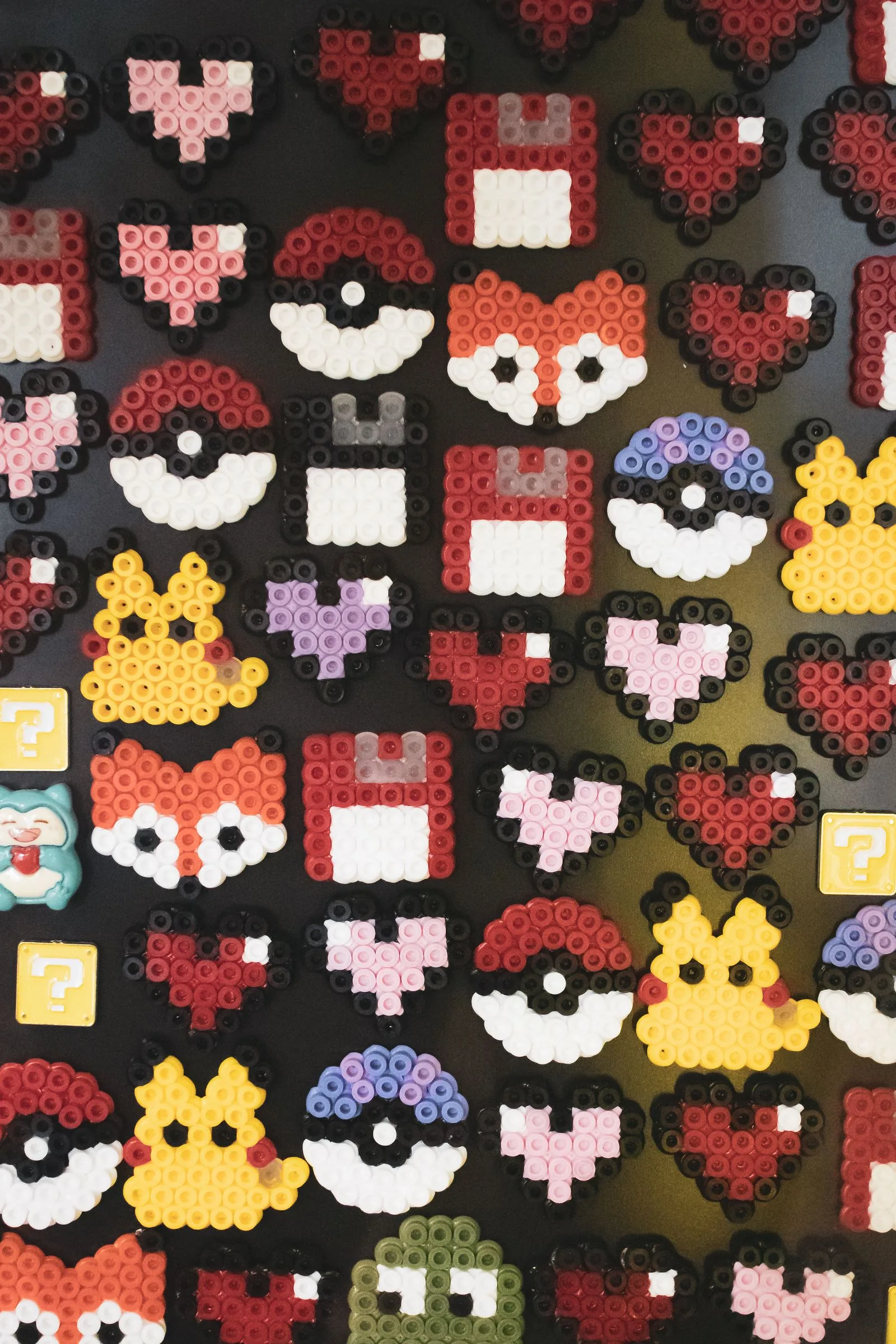
Perler bead sizes at a glance
Every fuse bead you buy is one of three diameters. The names differ by brand, but the actual sizes line up, because the whole point of fuse beads is that they sit on a pegboard at a fixed pitch and melt together into a flat panel. Here are the numbers, in mm, with approximate beads per inch and the equivalents across the three brands Beadify supports.
| Size | Diameter | Approx. beads / inch | Typical use | Who makes it |
|---|---|---|---|---|
| Mini | 2.5–2.6 mm | ~10 | Jewelry, keychains, fine detail. Needs its own smaller-pitch pegboards. | Perler Mini (2.6), Artkal C / M / A (2.6), Hama Mini (2.5) |
| Midi | 5 mm | ~5 | The default. Everything from coasters to large pixel-art panels. | Perler (Midi), Hama Midi, Artkal S, Nabbi |
| Biggie / Maxi | ~10 mm | ~2.5 | Toddlers and young kids (age 3+). Big, easy-to-place beads. | Perler Biggie, Hama Maxi, Nabbi Jumbo |
Beads per inch is just 25.4 mm divided by the diameter, so a 5 mm Midi bead gives about five per inch and a 2.6 mm Mini gives about ten. That ratio is the single most useful fact here: switching from Midi to Mini doubles the resolution of your design in the same physical footprint, and switching to Biggie halves it.
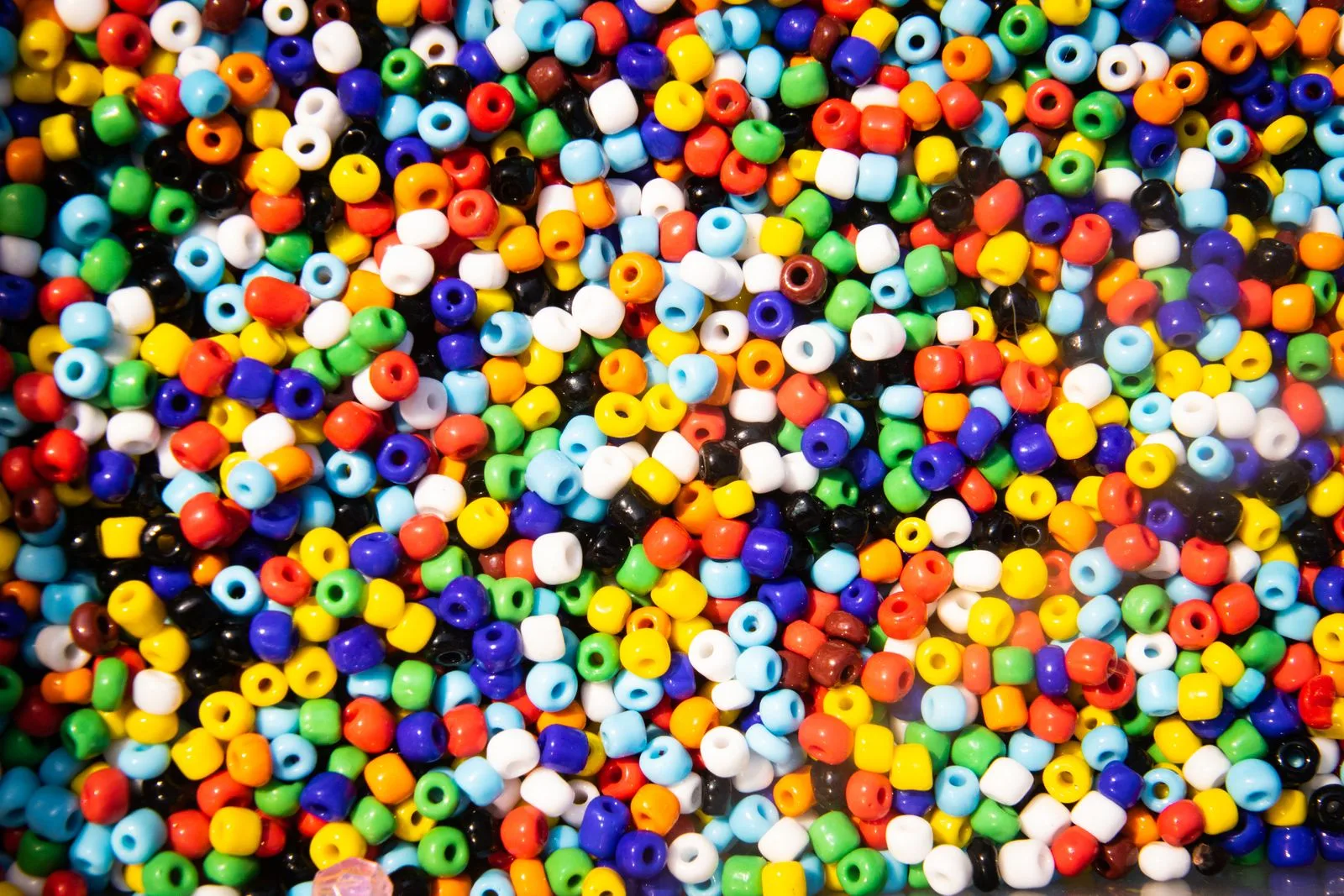
Mini beads (2.6 mm): detail and jewelry
Mini beads are the small ones. Perler Mini and Artkal's C, M and A series are all 2.6 mm; Hama Mini is a hair smaller at 2.5 mm. At roughly ten beads per inch, a Mini panel holds about four times as many beads as a Midi panel of the same size, so this is where you go for portrait detail, small sprites, and earrings.
The trade-offs are real. Mini beads ride on their own pegboards with a tighter peg pitch — you cannot place them on a standard Midi board. They are fiddly to position, usually with tweezers, and the fusing window is less forgiving because a small bead has less plastic to melt. If you are chasing the "perler mini vs midi" question, the honest answer is that Mini buys you detail at the cost of speed and patience.
Artkal is worth a note here: its A series is a soft, flexible bead while the C and M series are hard. All three are 2.6 mm and fuse together, so the choice is about finish, not size.
Midi beads (5 mm): the standard everyone shares
Midi is the size you get if a pattern, a kit, or a person just says "Perler beads" with no qualifier. It is 5 mm in diameter and about 5 mm tall, which works out to roughly five beads per inch. This is the interchangeable standard: Perler Midi, Hama Midi, Artkal S and Nabbi Midi are all 5 mm and mix on the same pegboard without any visible seam.
For most projects — coasters, magnets, signs, and the large pixel-art panels people actually hang on a wall — Midi is the right call. It fuses reliably, it is cheap, it comes in the widest color range, and every pegboard and pattern assumes it. If you are following a chart from a perler bead pattern maker or a printable, it is drawn for 5 mm beads unless it explicitly says Mini.
This is also the answer to "what size are 5 mm fuse beads" — 5 mm just is the Midi size. There is no separate "5 mm" category; it is the same standard bead under a plain measurement.
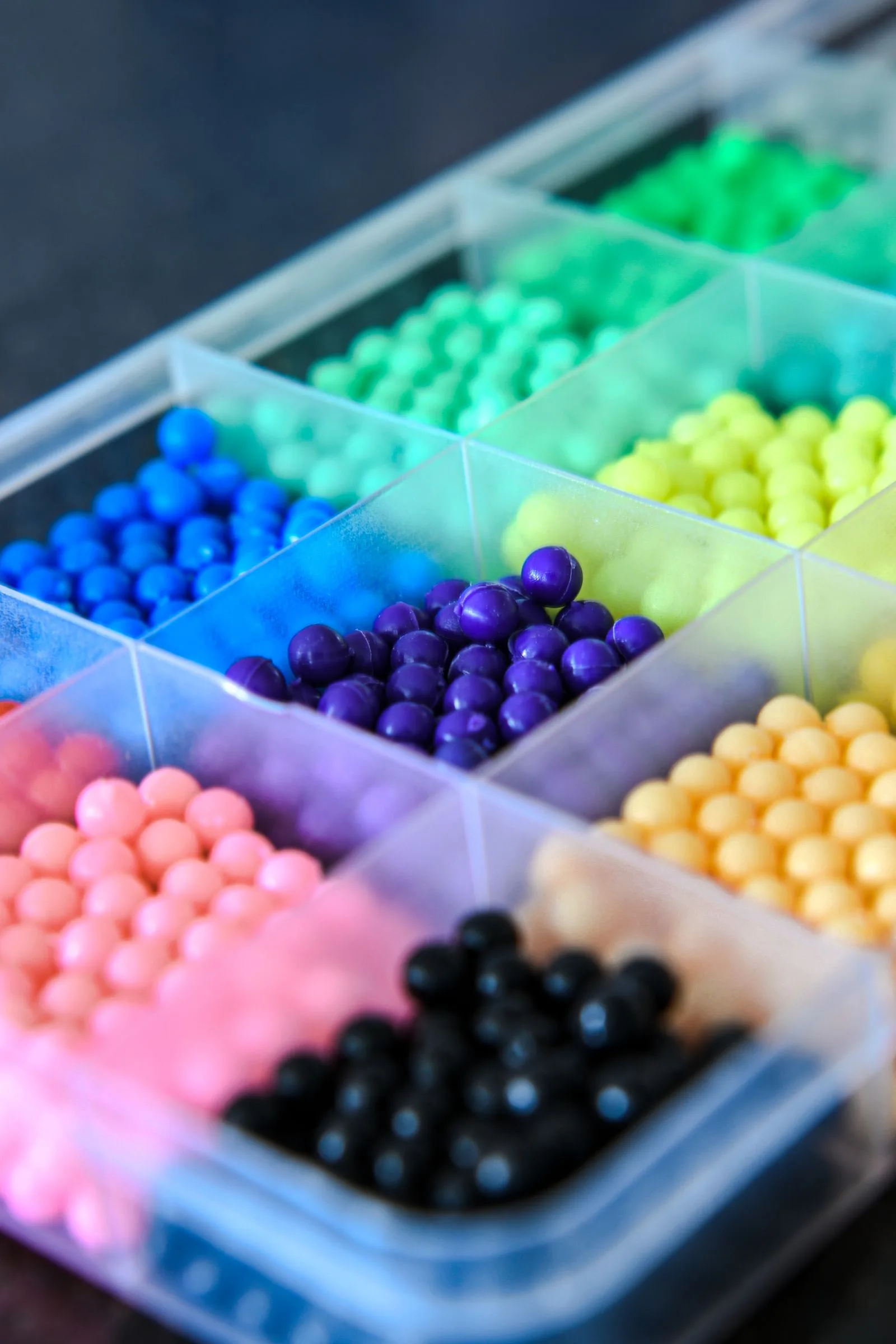
Biggie & Maxi beads (10 mm): built for little hands
Biggie beads (Perler's name) and Maxi beads (Hama's name) are the jumbo size, about 10 mm across, or roughly 2.5 beads per inch. They exist for one reason: young children. A 10 mm bead is easy for a three-year-old to pick up and press onto a peg, and the large pegboards have wide spacing to match.
The size trade-off is coarse resolution. You are not making a detailed portrait out of Biggie beads — a design is blocky by nature at 2.5 beads per inch, which is exactly what you want for a toddler's first fuse-bead project. Note that Biggie and Maxi need their own dedicated pegboards; they will not sit on a standard Midi board.
How big is a Perler bead? A size comparison
If you want a mental picture of "how big is a Perler bead," here are the three diameters drawn to scale. A Midi bead is roughly the width of a pencil; a Mini is about half that; a Biggie is about the width of an adult fingertip.
One thing to notice: fuse beads are round and, on the board, effectively square in the grid — a Midi bead is 5 mm wide and 5 mm tall, so a square image comes out square. That is different from cylinder seed bead sizes like Miyuki Delica, where the bead is wider than it is tall and a square image renders about 20% wider than it is tall. With Perler, you do not have to correct the aspect ratio; the grid is honest.
Are Perler, Hama and Artkal the same size?
At the Midi standard, yes — and this is the fact that saves you money. Perler Midi, Hama Midi, Artkal S and Nabbi are all 5 mm, so you can buy whichever brand is cheapest or has the color you need and drop them onto the same board. The seam is invisible after fusing.
The small size is where the brands drift apart. Perler Mini and Artkal's 2.6 mm beads are the same; Hama Mini is 2.5 mm. That 0.1 mm rarely matters for a single-brand project, but Mini beads from different systems ride on different pegboards, so plan to stay within one board's pitch rather than assuming they interchange like Midi does. For a deeper look at color range, plastic type, and price, see how Perler, Hama and Artkal differ.
Perler bead diameter cheat sheet
- Mini: 2.6 mm (Hama Mini 2.5 mm) — ~10 beads/inch
- Midi (standard): 5 mm — ~5 beads/inch
- Biggie / Maxi: ~10 mm — ~2.5 beads/inch
Which size should you use?
- Coasters, magnets, wall pixel art: Midi 5 mm — the default, cheapest, widest colors.
- Earrings, keychains, small detailed sprites: Mini 2.6 mm for the extra resolution.
- Portraits and photo conversions: Mini if you can find the pegboard space; otherwise a larger Midi panel.
- Kids under 6 / toddlers: Biggie or Maxi 10 mm — safer and far easier to place.
- Following a printed pattern: assume Midi unless the pattern says Mini.
If detail is the goal but you are not sure a design will read at Mini size, work out the bead count first. Our guide on how many beads you need covers the same density math for any bead size.
How Beadify helps
Beadify has bead-size presets for Mini, Midi and Biggie, so the physical scale is baked into your pattern. Pick a size and the app shows your design at its true finished dimensions — a 58×58 grid in Midi is about 29 cm across, and the same grid in Mini is about 15 cm — instead of leaving you to guess. The exported PDF lists the bead count per color, so your shopping list matches the size you actually chose.
That means you can pick your bead size in Beadify and see the piece at its real physical size before you buy a single bead. The free 7-day Pro trial is enough to convert a photo, switch between Mini and Midi, and compare the finished dimensions side by side.
Frequently asked questions
How big is a Perler bead?
A standard (Midi) Perler bead is 5 mm in diameter and about 5 mm tall, so roughly five fit in an inch. Mini beads are 2.6 mm and Biggie beads are about 10 mm.
What is the difference between mini and midi Perler beads?
Midi is 5 mm and the default; Mini is 2.6 mm and packs about twice the detail per inch. Mini needs its own tighter pegboards and is aimed at jewelry and fine work.
Are Perler and Hama beads the same size?
At Midi size, yes — both are 5 mm and mix freely. At the small size, Perler and Artkal Mini are 2.6 mm while Hama Mini is 2.5 mm, from different pegboard systems.
What size are 5 mm fuse beads?
5 mm is the Midi or "standard" size — Perler Midi, Hama Midi, Artkal S and Nabbi. It is what almost every pattern assumes.
Get the size right first and everything downstream — pegboard, bead count, finished dimensions — falls into place. Match your pattern to Mini, Midi or Biggie before you buy, and you will not end up with a design that is twice the size you pictured.
Set a Mini, Midi or Biggie preset and see your pattern at its true finished size, with exact bead counts per color.
Try it free →