Peyote Stitch for Beginners
By the end of this guide you will be able to start a flat peyote band, work both even-count and odd-count, recover from the dreaded odd-row turn, read a peyote chart without losing your place, and understand why an open hole in the middle of a peyote piece is an advanced move rather than a skipped bead.
What peyote stitch actually is
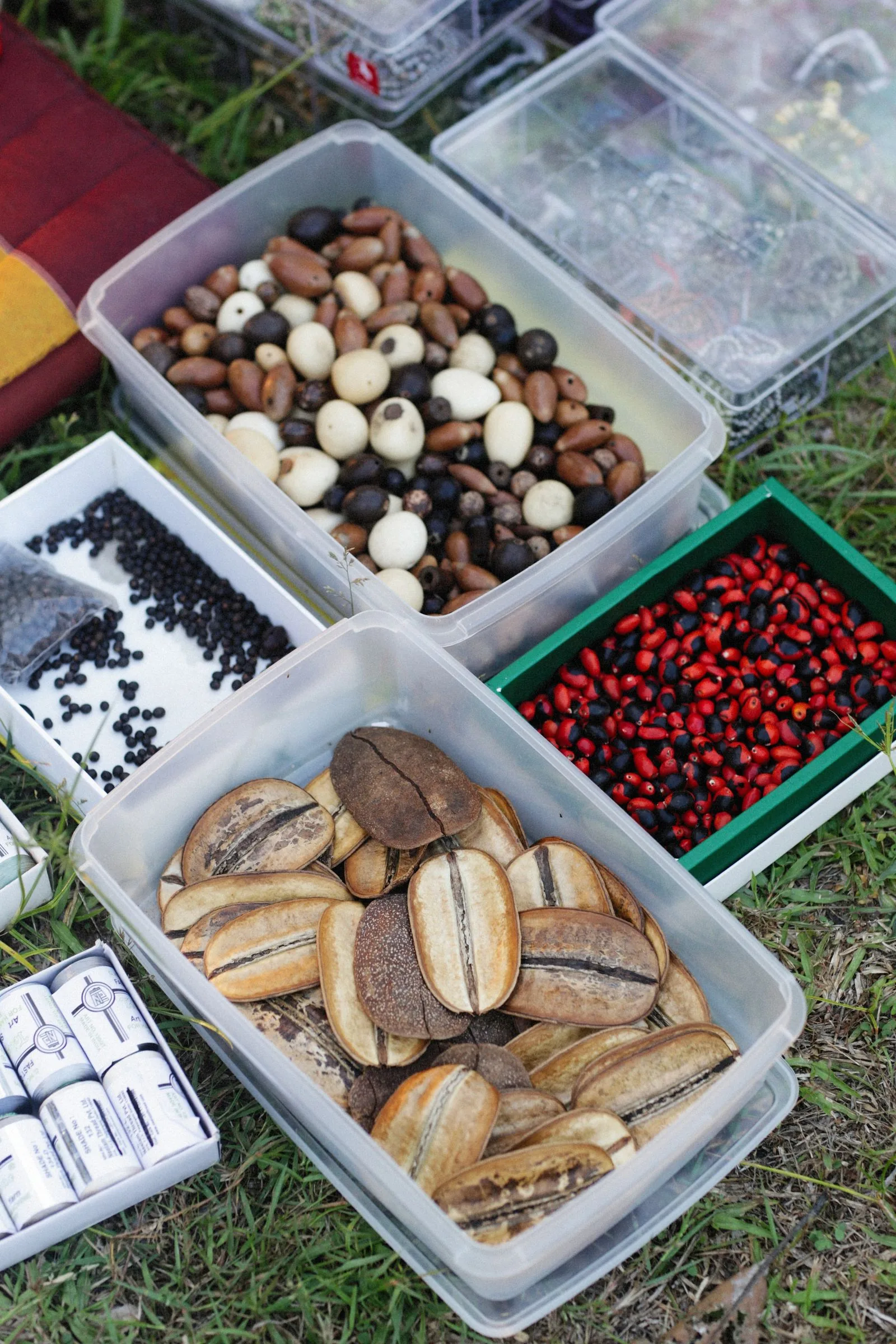
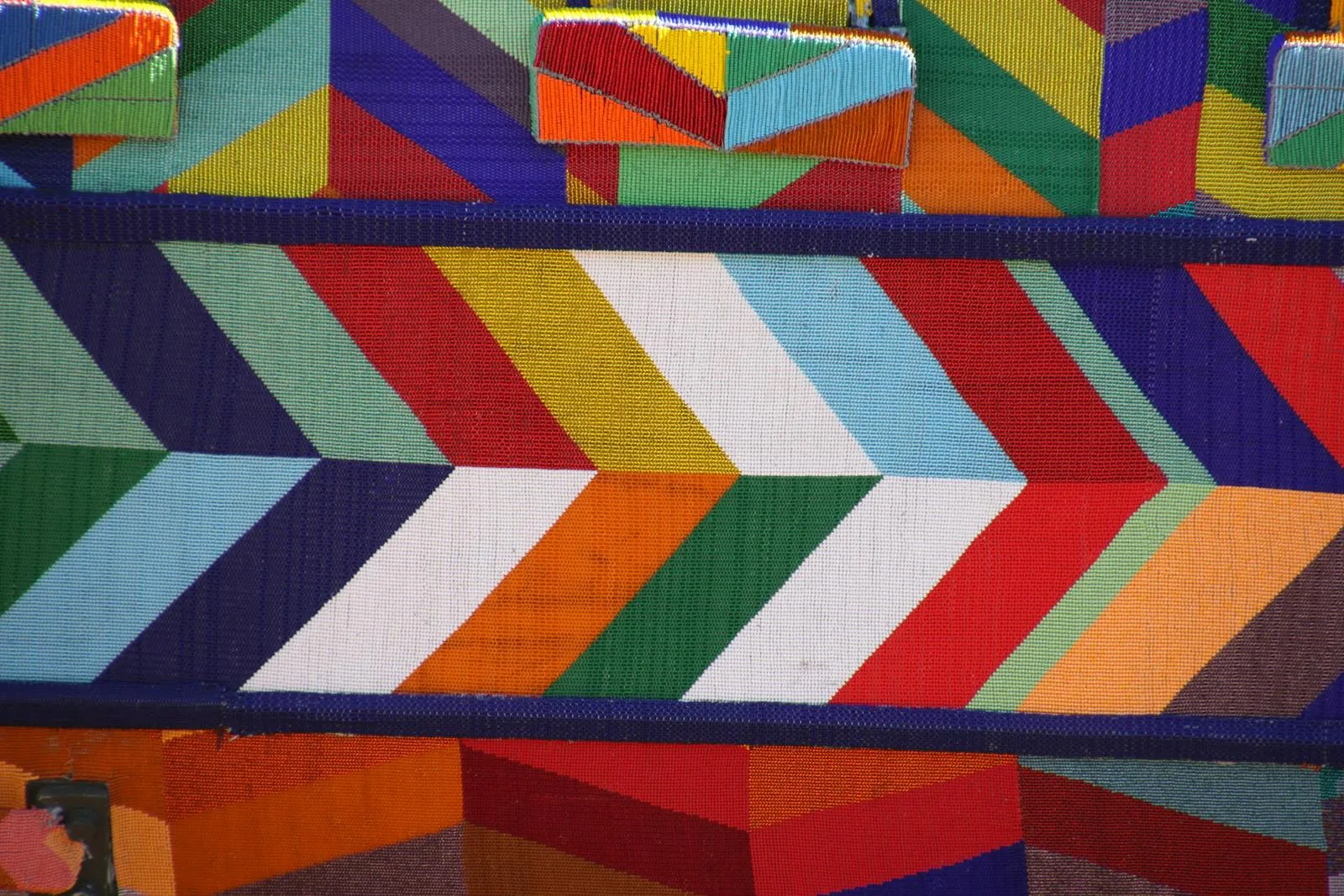
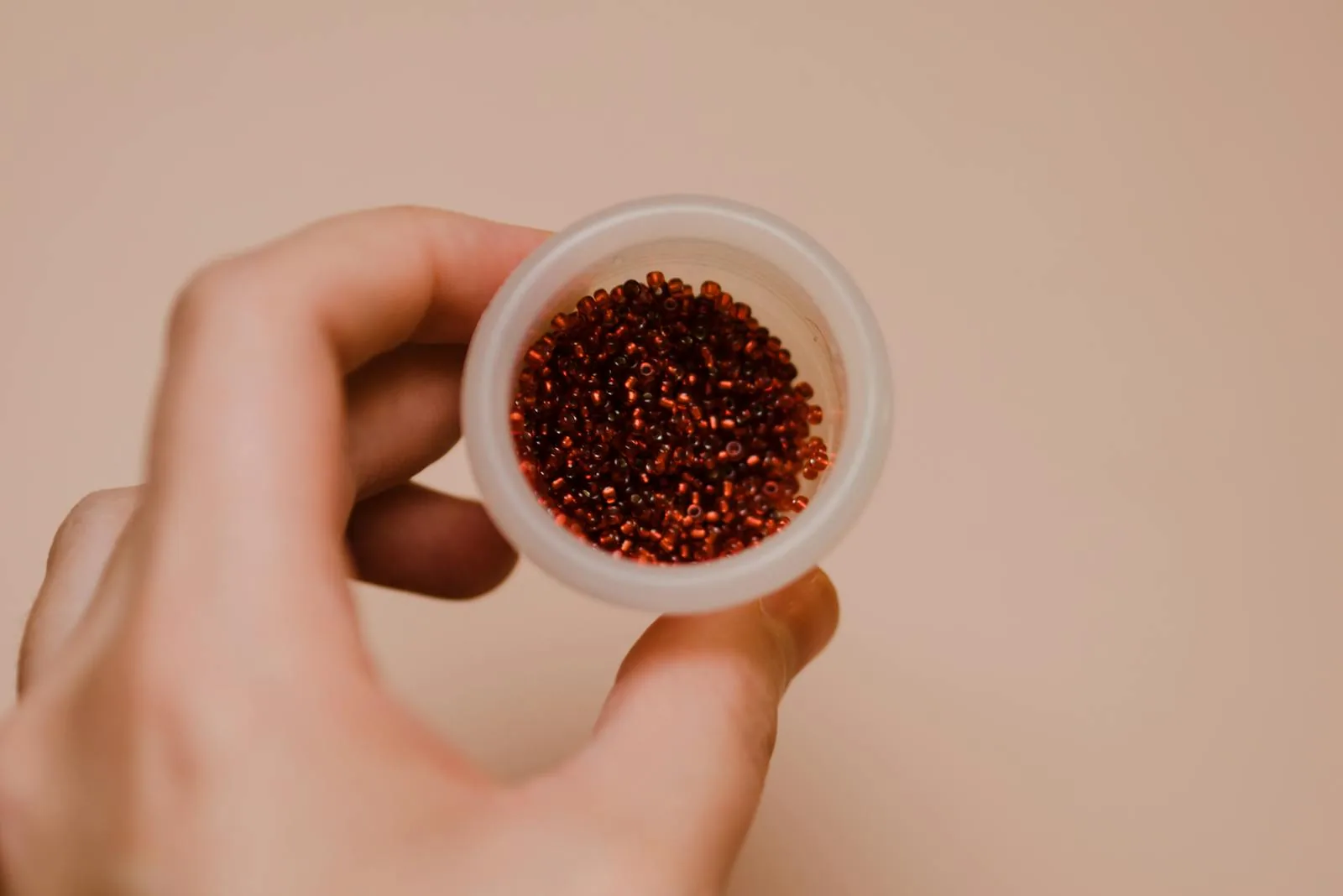
Peyote stitch is an off-loom bead weaving technique where beads sit in offset columns, each bead nesting into the gap left by the row beside it. Done in size 11/0 Miyuki Delica beads, the finished fabric is firm and flat, with a surface that looks like tiny staggered bricks. It is the backbone of most cuff bracelets, beaded pens, amulet bags, and bead-embroidered focal pieces you will see online.
Peyote stitch for beginners trips people up for one reason: you do not work in tidy straight rows. The thread travels back and forth, and the beads you add sit between the beads already there. Once you internalize that the new bead always pops up into a gap, everything else follows.
Two terms you need before we start. An up-bead is a bead that sits higher than its neighbors, sticking up at the working edge — it is where your next bead anchors. A down-bead is the recessed bead you skip over. Every peyote stitch is the same move: add a bead, skip the down-bead, pass through the next up-bead.
Even-count flat peyote, step by step
Even-count is the friendliest place to begin because both edges behave the same way. The thread path below is the standard one taught by Beadaholique and most beading schools. Thread a size 11 or 12 needle with about 1.5 meters of thread.
- Add a stop bead. Pick up one bead and pass through it twice, leaving a 15 cm tail. This is a temporary anchor that keeps your beads from sliding off — you will remove it later. It is not part of the pattern.
- String rows 1 and 2 together. Pick up an even number of beads — 8 is a good starter. Counterintuitively, these eight beads become your first two rows at once. Every other bead will drop down to form row 1; the ones between them become row 2.
- Work row 3. Pick up one bead. Working back toward the tail, skip the last bead you strung and pass through the next bead. The new bead sits up on top. Pick up another bead, skip the next down-bead, pass through the following bead. Continue to the end of the row.
- Keep going. Every subsequent row is the same rhythm: pick up a bead, skip a down-bead, pass through the next up-bead. As you add row 3, you will feel rows 1 and 2 separate and lock into their offset positions.
Pull each stitch snug before adding the next bead. Loose tension is the single most common beginner problem — gappy peyote shows thread between the beads and never sits flat.
The step up: finding your place
The step up is how you transition from the end of one row to the start of the next in even-count peyote. After you place the last bead of a row, your thread exits the final up-bead. To begin the new row, you pass through the first up-bead of the row you just completed so the thread points the right way for the first new stitch.
Get into the habit of saying "step up" out loud at each row end. If you forget it, your count drifts by one and the edge develops a visible jog. In even-count, the step up happens at the same edge every time, which is exactly what makes even-count easier to learn than odd-count.
Lost your place mid-row? Look at the working edge. The up-beads stick up; the down-beads sit back. Your needle always enters the next up-bead. If there is no up-bead where you expect one, you missed a step up on the previous row.
Odd-count flat peyote and the figure-eight turn
Odd-count peyote exists for one reason: symmetry. With an odd number of columns you get a true center column, which matters for a centered motif, a single-column stripe, or a symmetrical word chart. The cost is one awkward edge. Because there is no up-bead to turn on at the end of every other row, you need a turn (also called the turnaround) to anchor the last bead and reposition the thread.
The most reliable method is the traditional figure-eight turn, confirmed against Interweave's odd-count stitch tips. It is only needed at one edge, and only on the odd rows. Work the row normally until you place the last bead, then:
- Pick up the final bead of the row and pass your needle through the low edge bead, continuing diagonally through the next two beads down the edge.
- Pass the needle through the bead directly under the one your thread is now exiting — this is the sideways leg that makes the figure eight.
- Pass back through that original low edge bead at the corner.
- Pass back up through the last bead you added in step 1. Your thread now exits in the correct position to begin the next row.
It feels fussy the first three or four times. After that your hands learn the loop and it takes a couple of seconds. On the opposite edge, the turn is a normal step up — only this one edge needs the figure eight. Many beaders only use odd-count when a centered design genuinely requires it, and stay with even-count otherwise.
Reading a peyote chart
A peyote chart is not read straight across like a loom chart. Because the columns are offset by half a bead, the cells are drawn staggered, and you follow the work in a zigzag that tracks the up-beads. This is the column offset that throws every beginner who came from cross stitch or loom work.
Three things to confirm before you place a single bead:
- Orientation: peyote charts are usually read with columns running the length of the piece. Identify which direction is "up the band" versus "across the band."
- Start bead: the chart should mark where row 1 begins. Count your strung beads against the first two offset columns to confirm you are aligned.
- Offset direction: note whether the odd or even columns sit high. Reading the offset backward mirrors your design.
Remember the bead is wider than it is tall. A size 11/0 Delica measures roughly 1.6 mm wide by 1.3 mm tall, so the grid cell is rectangular, not square. A design that looks correct on a square-cell preview comes out about 20% wider than tall when stitched bead-for-bead — a circle becomes a horizontal oval. To correct it, add rows (multiply your row count by about 1.23) or build the source about 25% taller than wide. Our full walkthrough on how to read a bead chart covers the offset and aspect ratio in detail.
Tension and other things nobody tells you
Tension makes or breaks peyote. Too loose and the fabric is floppy with thread showing; too tight and it curls and the beads cannot seat. Aim for a fabric that flexes like stiff cloth and holds its shape when you set it down.
- Use a stop bead, always. It is the difference between a clean start and beads sliding off your tail.
- Do not bury the tail until you are a few rows in. Once the fabric is stable, weave the tail back through several beads, take a half-hitch (a small knot looped around the thread between two beads) to lock it, pass through a few more beads, and trim. This is how you bury the thread so no end shows.
- Thread two needles' worth before a big piece. Running out mid-row is annoying; add a new thread by weaving it in a few rows below the working edge with a half-hitch, exiting where the old thread left off.
- Pick a high-contrast palette for your first band. When you can see the pattern clearly, you catch a missed step up immediately.
Negative space in peyote is an advanced move
Here is the trap. In a chart, an empty cell — what the beading community calls negative space or openwork — looks like you simply skip a bead and carry on. In loom work that is trivially true: the warp threads still run through the gap, so you just leave those warps unbeaded. In peyote, it is not.
A peyote bead is held in place by the beads on either side of it. Skip one mid-row and the neighboring beads have nothing to anchor to — the fabric falls apart at that point. To create an internal hole in peyote you work it as separate strips and then bridge them. As Interweave describes, you stitch the bottom, the two sides, and the top of the opening as connected strips, then close the gap by working a bridging row across the void. If the first bridging bead feels insecure, square-stitch it to the nearest bead in the same column before continuing in peyote.
There is no community-standard notation for a void in a written (word) chart. Beadify writes it as (N gap) to mean "N cells with no bead here" — treat that as our own convention, not an industry standard. The takeaway: openwork in peyote is a real, achievable technique, but plan it as strips and bridges from the start, not as a row you can interrupt.
How Beadify helps
Beadify turns a photo or design into a peyote chart with the column offset already applied, so the preview matches what you will actually stitch — including the wider-than-tall bead ratio. It matches every color to a real SKU in Miyuki Delica, Toho, or Preciosa and gives you exact bead counts per color before you buy. When your design includes negative space, the export flags the voids so you know where strips-and-bridging will be needed rather than discovering it at the needle.
Related reading
- Peyote Stitch vs Loom Stitch: Which Should You Choose? — how the two methods change your chart and your finished fabric.
- Brick Stitch for Beginners — the stitch most often confused with peyote, and how to tell them apart.
- How to Read a Bead Chart — orientation, offset, and color codes for any chart you pick up.
Start with an even-count band in two contrasting colors, eight beads wide, and stitch until the rhythm of "add, skip, through" stops needing conscious thought. Once that is automatic, odd-count and openwork are just variations on a move your hands already know.
Turn any photo into a ready-to-stitch peyote chart — column offset applied, colors matched to real bead SKUs, exact counts per color.
Try Beadify free →